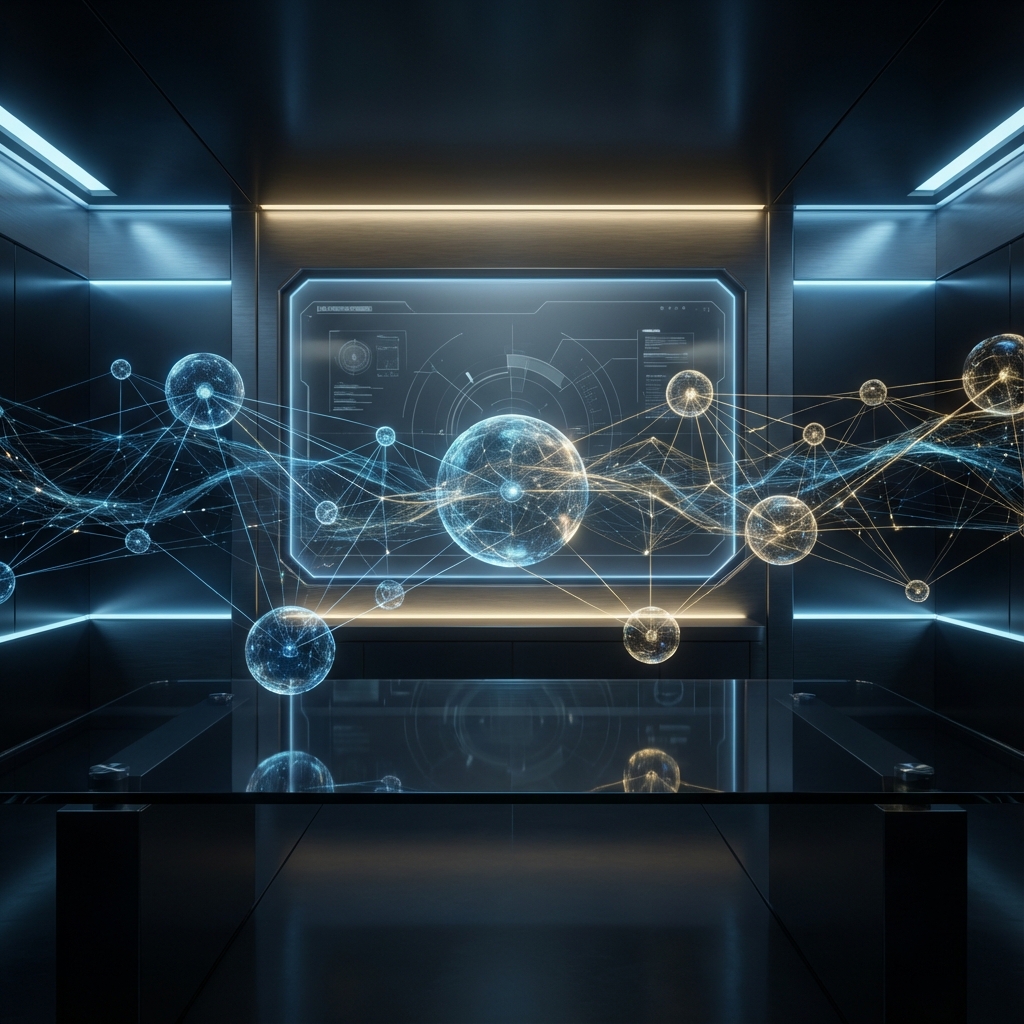
The shift from sequential automation to Agentic AI is fundamentally changing how we build software. In this deep dive, we explore the architecture behind resilient Multi-Agent Systems (MAS).
Beyond the Prompt: Sequential vs. Graph Workflows
Traditional LLM applications follow a linear "Chain of Thought" (CoT). However, complex enterprise tasks require loops, conditional branching, and self-correction. This is where Agentic Graph architectures—implemented through frameworks like LangGraph—become essential.
Sequential Chains
Step A -> Step B -> Step C. Rigid and prone to "cascading errors" where one mistake breaks the entire sequence.
Agentic Graphs
Dynamic cycles where agents can revisit previous steps, query different tools, and validate their own outputs.
Multi-Agent Orchestration: A Team of Experts
Rather than one massive "Generalist" agent, Datadesh architectures often feature a Manager Agent orchestrating multiple specialized agents (e.g., a "Coder" agent, a "QA" agent, and a "Compliance" agent). This modularity leads to significantly higher reliability.
- Specialization: Each agent is tuned (via System Prompts or training) for a specific domain.
- Peer Review: Agents can "critique" each other's work before a final result is delivered.
- Dynamic Scaling: Adding a new "Expert" agent to the graph doesn't require re-writing the entire logic.
State Management and Short-Term Memory
The secret to effective agents is State. Agents must maintain a continuously evolving summary of their findings, tool results, and previous decisions. We utilize persistent checkpoints to ensure that if a complex task fails midway, the agent can resume from the last successful node in the graph.
Technical Spotlight: AutoGen & LangGraph
While AutoGen excels at conversation-centric agent patterns, LangGraph provides fine-grained control over the control flow, making it ideal for highly predictable enterprise workflows. At Datadesh, we combine these approaches to build systems that are both conversational and strictly governed.
Looking Forward: The "Agentic Operating System"
We are moving toward environments where AI agents are integrated into the core of the OS, handling low-level file manipulations, API calls, and cross-application workflows seamlessly. The enterprise of 2026 will not be "AI-assisted"—it will be Agent-first.